
On a job site it is easy to treat the seat belt as optional: short hops, low speed, “I am only moving the machine.” That habit is one of the most expensive myths in construction.
Heavy equipment does not need highway speed to injure. A tip-over on a slope, a sudden stop when the bucket catches, or a bounce on uneven ground can throw an unbelted operator into the cab frame, the glass, or out of the seat — exactly when ROPS/FOPS protection only works if you stay inside the protected zone.
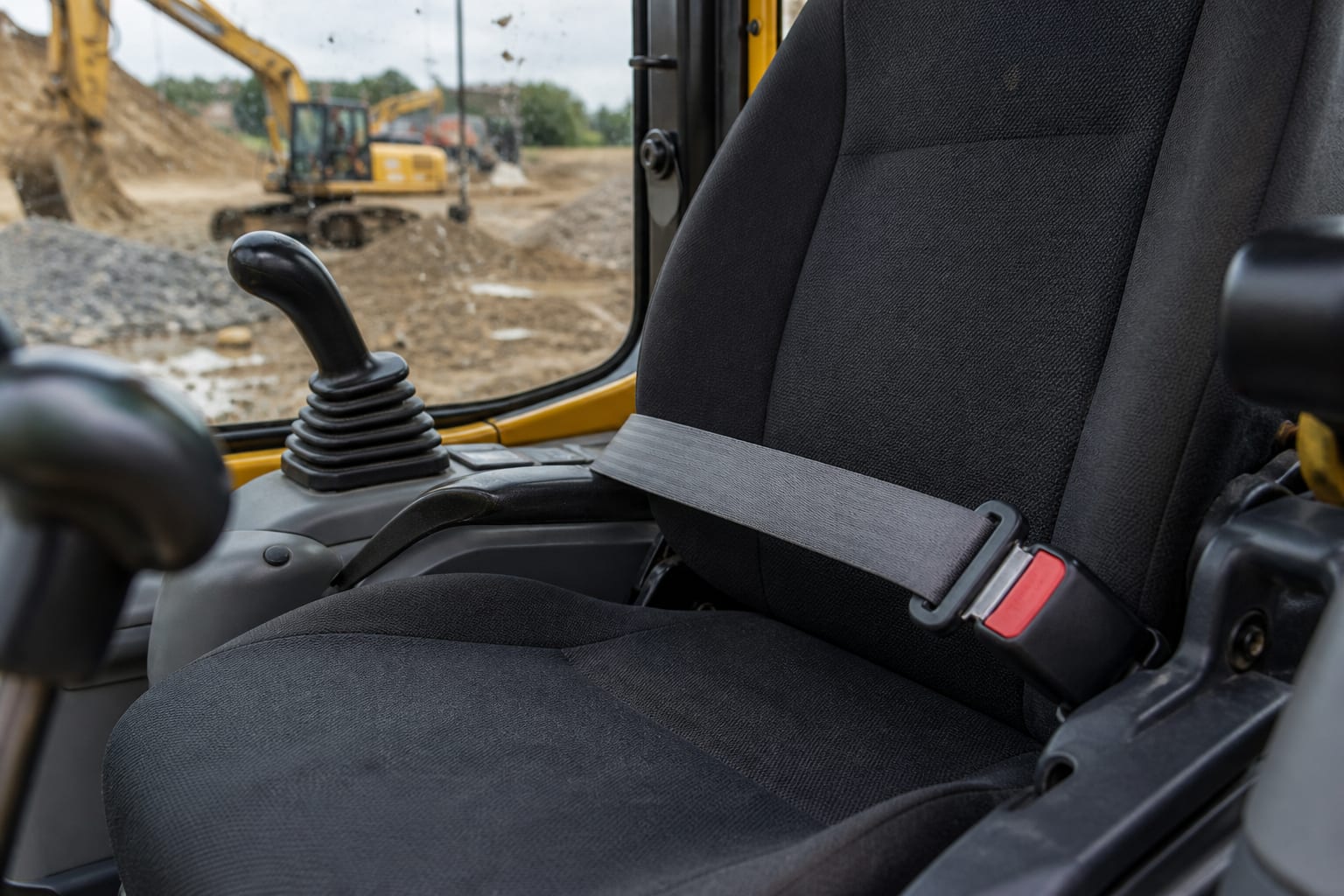
Use the restraint every time the machine moves or works: travel, loading, digging, and repositioning. Buckle before you start the cycle, not after the first scare. If the belt is missing, cut, jammed, or the retractor fails, park the machine and fix it before the next shift.
Owners and fleet managers should treat belts like brakes: inspect webbing for fray and UV damage, check buckles and anchors, and replace worn parts with the correct OEM or certified components. After any rollover or hard impact, do not “stretch” a damaged belt back into service — replace the assembly.
The same logic applies off the site. In road cars, a worn or faded belt still has one job: keep you in position in a crash. If you need quality webbing, colour options, or professional replacement of seat-belt material (never reuse belts from crash-damaged vehicles), specialists such as VreauCenturi.ro focus on that work.
Hiring or listing machines? Prefer cabs where restraints work and ask about operator practices. On Utilaro, browse equipment for rent, operators, or list your fleet — and keep safety checks in the same brief as rates and transport.
For crew decisions on hire, see operator included vs dry hire. For owners preparing ads, use the listing checklist.