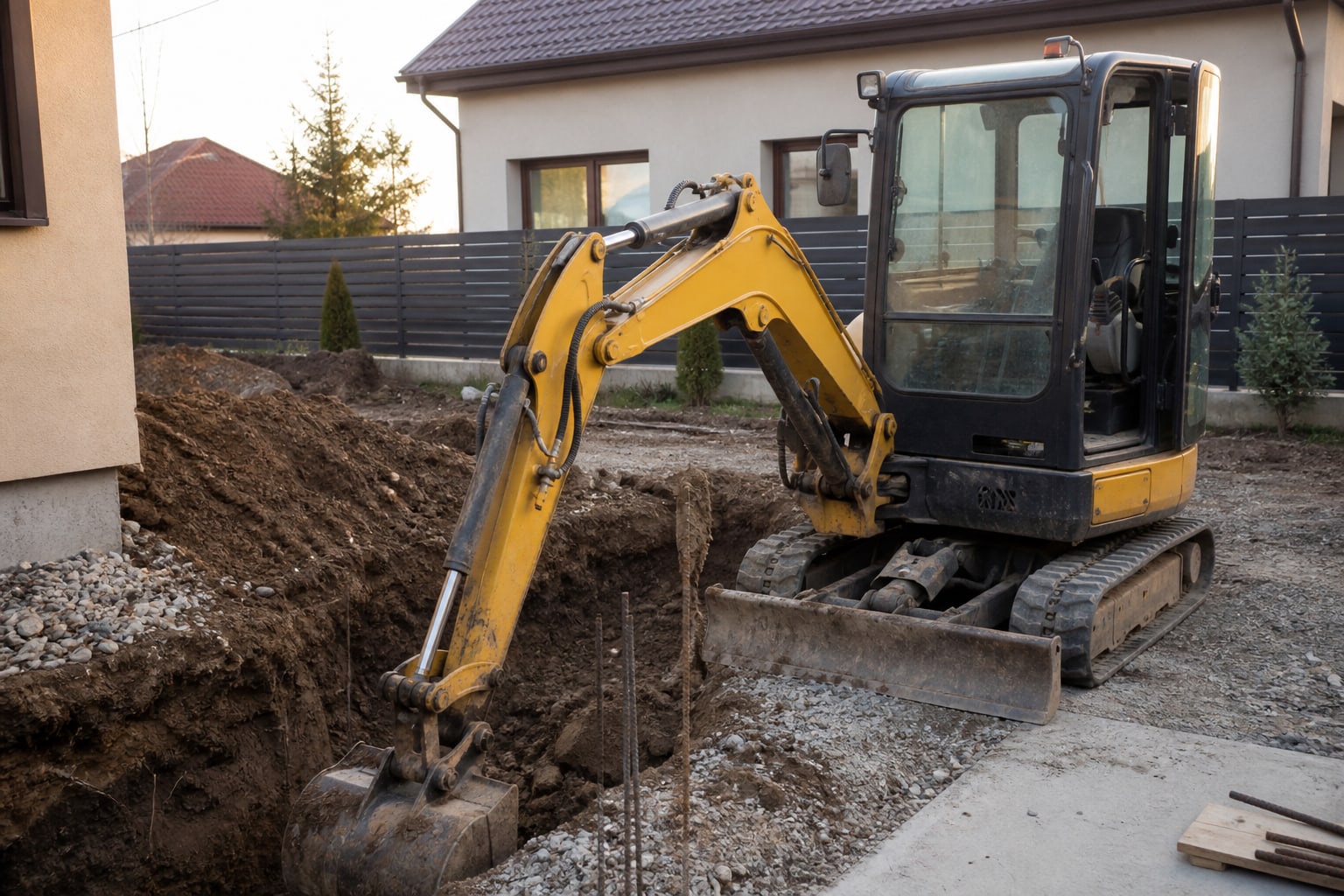

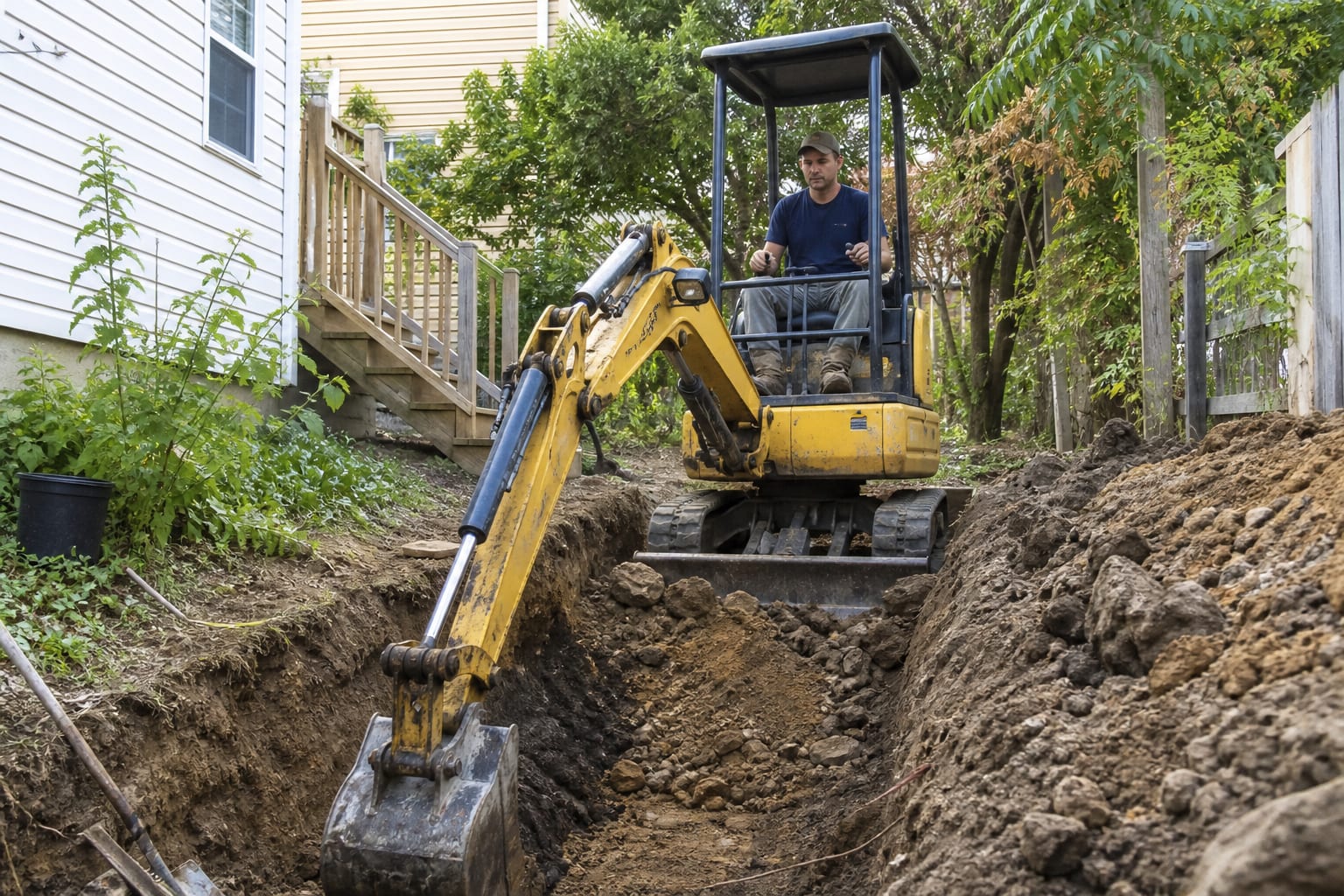
A mini excavator is the right rental when access, weight limits, or finished surfaces rule out a bigger machine — not simply when you want the lowest day rate on paper. A compact digger that is one class too small burns hours, fuel, and rental days, and an oversized machine cannot get through the gate at all.
This guide covers how to size a mini excavator, what to confirm before you book, and how attachments and transport quietly decide the final invoice.
Advertising
Utilaro
Publicitate pe Utilaro
Spatiu disponibil pentru furnizori, servicii si branduri din domeniul utilajelor.
When a mini excavator is the right call
Choose compact when gate width, turning space, slab load limits, or delicate landscaping matter more than raw breakout force: courtyards, garden pools, house extensions, indoor demolition, drainage in built-up plots, and utility work along pavements. Rubber tracks and a zero or short tail swing let you work close to walls without hammering the structure behind you.
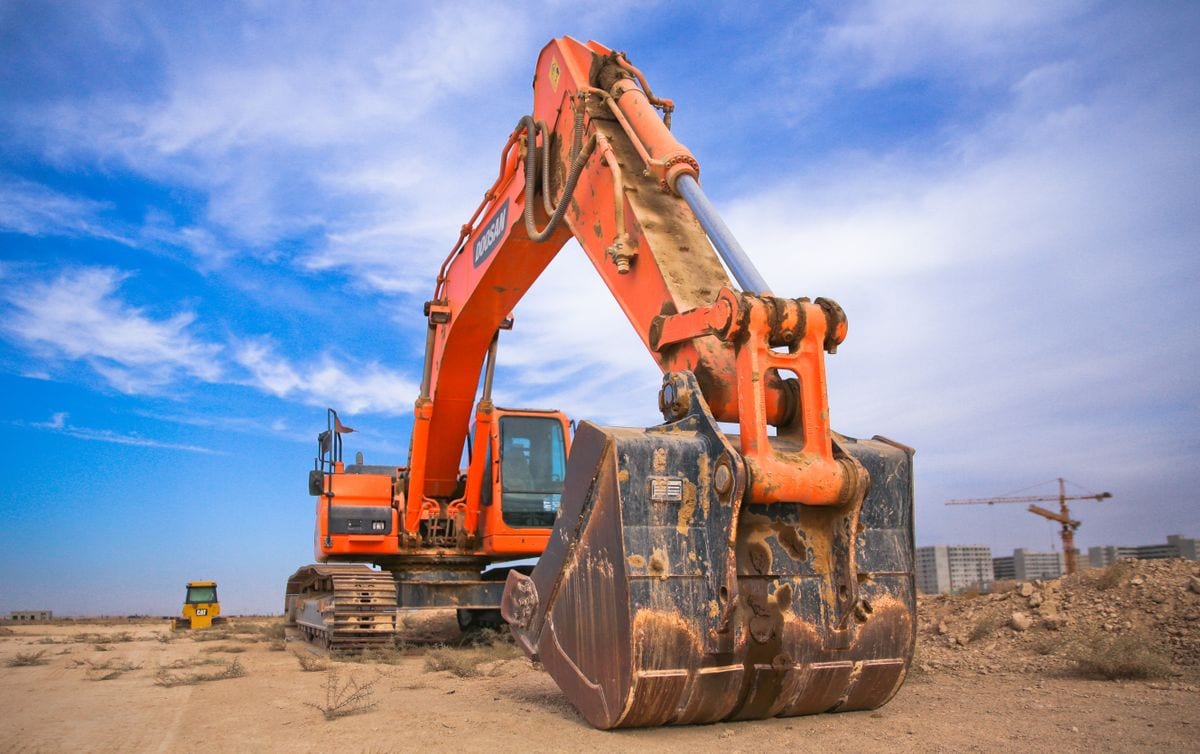
Choose mid-size when you need deep trenches, heavy hammer work, long reach, or high daily volume on open ground. Machines in the eight-to-fifteen-tonne class cost more per day but often cost less per cubic metre, because the job simply takes fewer days.
Size it by access and depth, not by the label
“Mini” covers everything from a one-tonne machine that fits through a 90 cm gate to a five-tonne digger that needs a proper trailer. Measure the tightest point of access, then work back from the task: required digging depth, dump height, and reach at full extension. Ask the owner for the machine’s transport width, height with the cab, and operating weight, and compare those to your gate, ramp, and slab capacity.
Pre-hire checklist
— Gate opening, turning radius, ramp gradient, and floor or slab load capacity.
— Digging depth and reach needed for the deepest trench or footing on the job.
— Operating weight and transport dimensions, including tail swing.
— Tracks: rubber for finished surfaces, steel or pads for rough ground.
— Attachments included in the day: digging bucket, grading bucket, auger, breaker.
— Transport: who loads, who drives, and whether both legs are quoted.
— Included hours, overtime rate, fuel policy, insurance, and deposit.
— Dry hire or operator, and the certification your crew holds.
Attachments and transport decide the total
Ask which attachments ship with the machine on day one. Swapping a bucket for a breaker mid-job means a second transport run and a half-day of downtime, which erases the saving from a low headline rate. Transport works the same way: a nearby owner with a trailer often beats a cheaper day rate two counties away, especially for a two or three day hire.
Decide dry hire versus operator early. If your crew lacks certification or experience on tight plots, an operator package is usually safer and faster, and it removes the argument about who caused damage to a kerb or a buried cable.
FAQ
How deep can a mini excavator dig? Roughly two to three metres depending on class and arm length. Always confirm the figure for the exact machine rather than the category.
Can a mini excavator work indoors? Yes, with ventilation planning and a slab load check. Electric and short-tail models exist specifically for that work.
Do I need a licence to operate one? You need the training and authorisation required for the machine class on your site. If you do not have it, hire with an operator.
Is a week cheaper than five separate days? Usually yes. Ask for a weekly rate as soon as the scope passes three days.
Find compact machines on Utilaro
Browse mini excavators for the compact classes, compare against the full excavator hub, or scan all equipment for rent. Use search to filter by region, transport, and operator options, then send one brief with dates, address, access notes, and depth.
Still deciding whether a mini is the right class at all? Read when a mini excavator is worth it. For crew choice read operator included vs dry hire. For rate context see excavator rental prices in Romania, and if you are new to the process, start with how to rent construction equipment.