
Choose dry hire when your own crew holds valid certification and insurance for that machine class and the job runs long enough to absorb the learning curve. Choose operator-included hire when the machine is unfamiliar, the work is short or technically sensitive, or you cannot free a certified driver in time. The comparison that matters is total cost per completed task, not the headline day rate.
What each model actually covers
Advertising
Utilaro
Publicitate pe Utilaro
Spatiu disponibil pentru furnizori, servicii si branduri din domeniul utilajelor.
Dry hire gives you the machine, usually delivered to site, with fuel and operation as your responsibility. You supply the operator, the certification, the daily checks, and in most contracts the damage liability during use. The rate looks low because a large part of the cost has simply moved onto your own payroll.
Operator-included hire wraps the machine, a licensed driver, and a defined number of working hours into one rate. The owner keeps responsibility for operator competence and, in most cases, for damage caused by operating error — but confirm that in writing rather than assuming it, because the wording varies from one owner to the next.
Compare total cost, not the day rate
Build the comparison across the whole task, not per day. For dry hire, add the day rate, transport in both directions, fuel, your operator wage and travel time, the insurance or damage excess you carry, and the extra days a less familiar operator will realistically need. For operator hire, add the all-in rate, overtime beyond the included hours, transport, and any fuel supplement.
On short emergency jobs, the operator-included package usually wins even though the sticker rate is higher, because you are not paying idle days while hunting for a licensed driver. On multi-week earthworks with a trained crew of your own, dry hire is normally cheaper by a wide margin — and the margin grows with every week.
Settle these questions before the machine arrives
Ask how many hours the day rate includes — eight, nine, or ten — and what overtime costs beyond that. Ask who pays for fuel and in what state the tank is returned. Ask whether transport is quoted per direction. Ask which certifications the operator holds and whether they are valid for your site type. Ask who covers damage during operation and what the excess is. And ask what happens if weather or a late subcontractor stops work: is a standby day chargeable?
Get the answers in a message rather than only on the phone. A written scope is what prevents the argument at the end of the hire, and it takes two minutes to produce.
Where to find each option on Utilaro
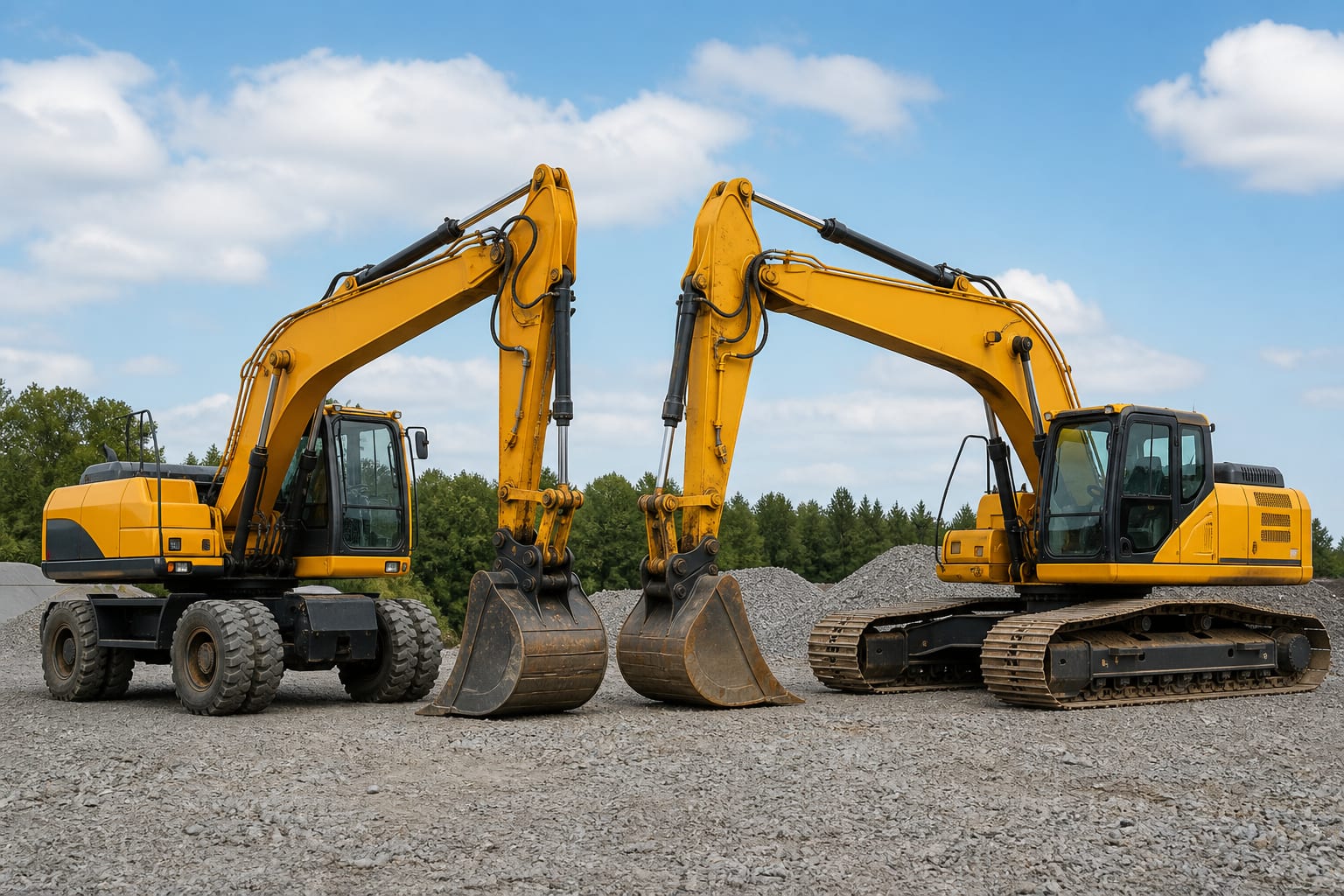
Browse operator services if you already have the machine and only need a driver, or open equipment for rent and use the operator filter to see listings that already flag operator availability. For a specific class, the excavator category is the fastest way to compare both models side by side on live listings.
FAQ
Is dry hire always cheaper? No. It is cheaper per day and frequently more expensive per completed task, because certification, fuel, insurance, and slower progress all land on you.
What certification does my operator need in Romania? It depends on the machine class and the site. Confirm the requirements with the owner and the site manager before delivery, and keep copies of the documents on site.
Who is liable if the machine is damaged? Under dry hire, normally you. Under operator hire, normally the owner for operating errors — although ground conditions and site direction can shift that, which is exactly why it belongs in writing.
Still unsure? Open equipment for rent, toggle the operator filter, and price both models for the same machine class. If you are still scoping the job itself, start with how to rent construction equipment.