
Short answer: hire a tracked excavator when the ground is soft, sloped, or unfinished, and a wheeled excavator when the site is paved, urban, and you move often. That single rule covers most jobs. The rest of this guide is about the exceptions — and about the transport bill, which decides more budgets than the day rate does.
Tracked excavators: grip, stability, rough ground
Advertising
Utilaro
Publicitate pe Utilaro
Spatiu disponibil pentru furnizori, servicii si branduri din domeniul utilajelor.
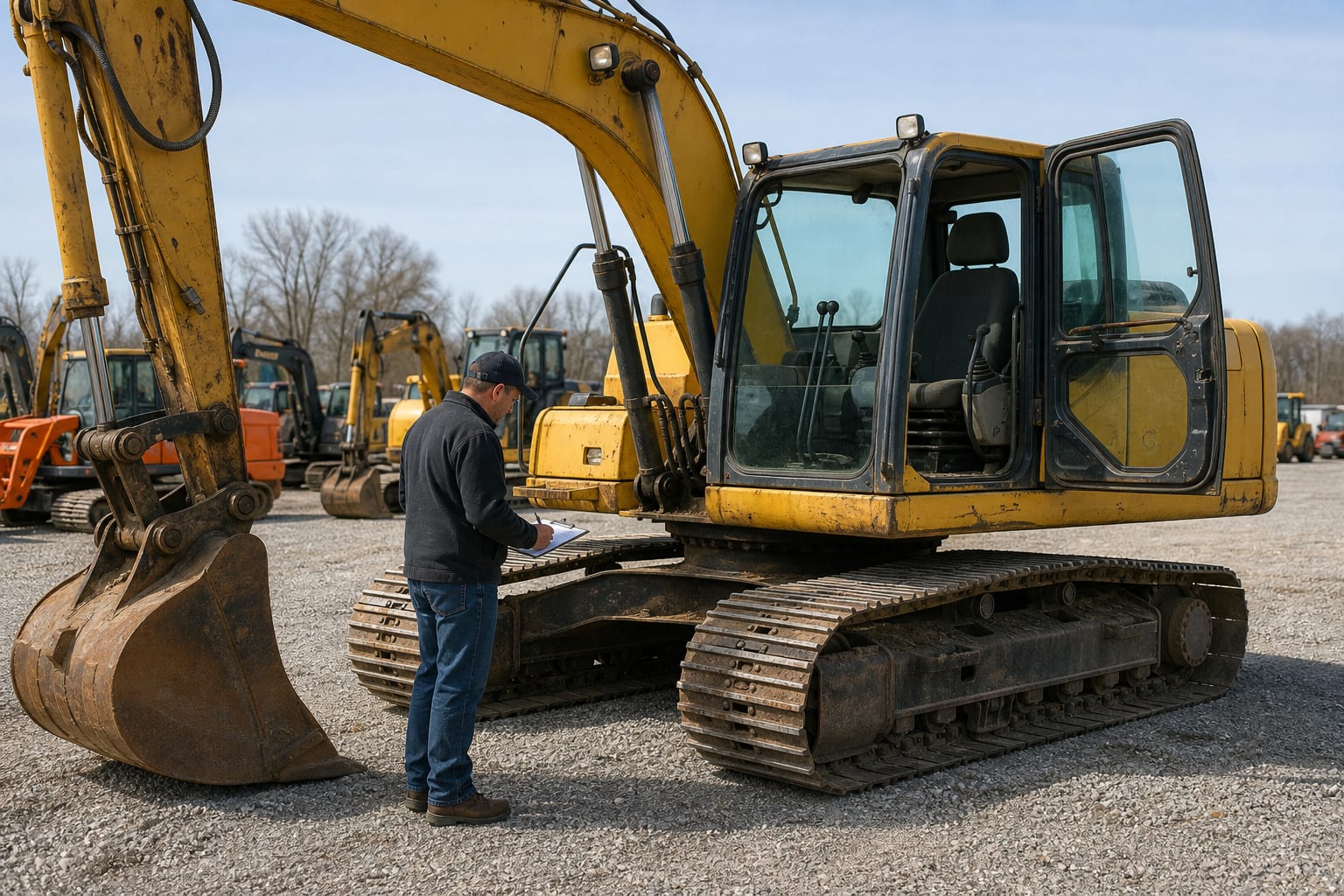
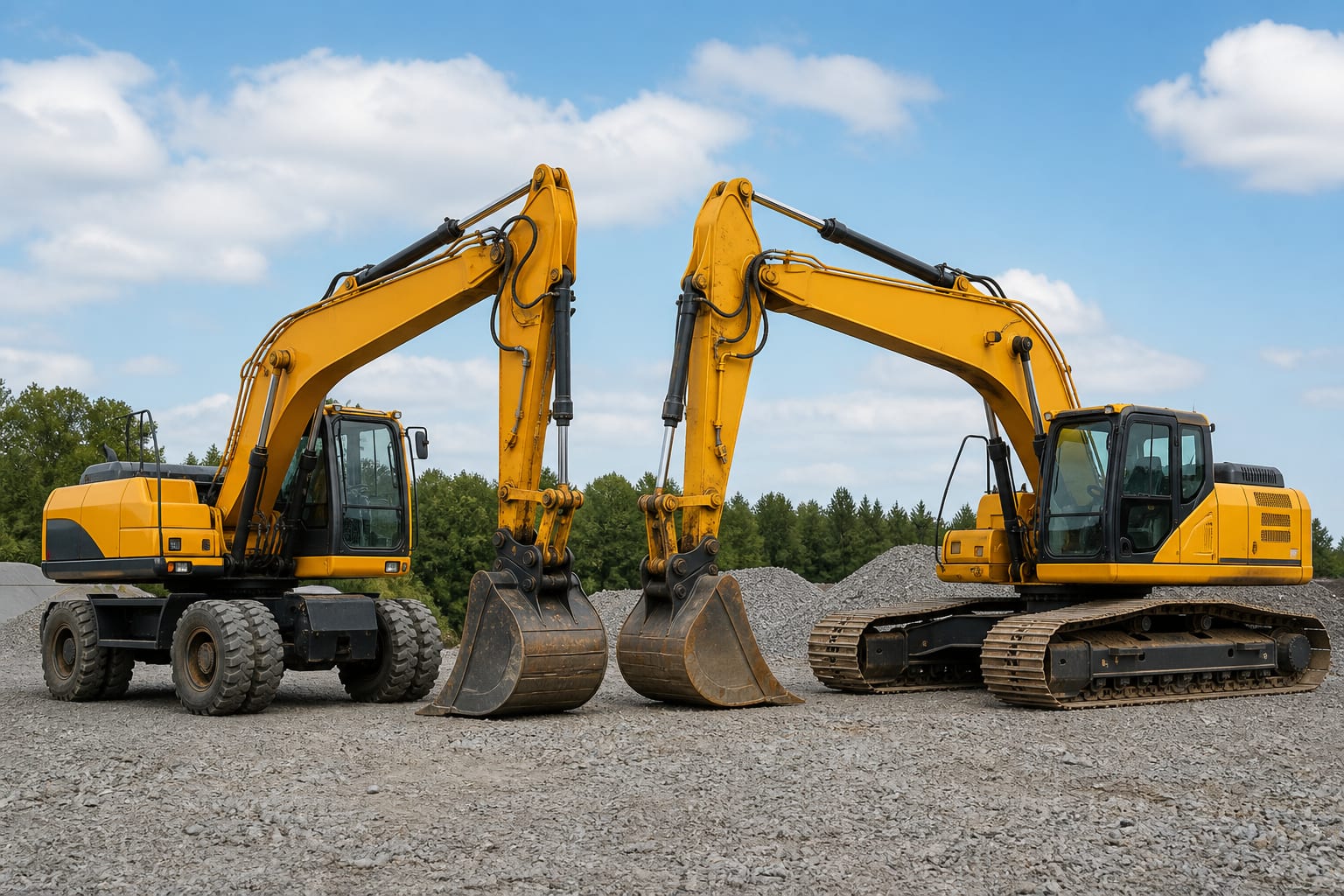
Tracks spread the machine’s weight over a large contact area, so ground pressure stays low and the excavator keeps working on mud, clay, sand, and freshly cut platforms. Stability is better when you dig at full reach or lift a pipe section, and slopes are far less stressful for the operator. The trade-off is mobility: a tracked machine travels slowly, damages asphalt without rubber pads, and normally needs a low-loader for every move between sites.
Wheeled excavators: speed between locations
A wheeled excavator drives itself between jobs on public roads where regulations allow, reaches road speeds a tracked machine cannot, and sets up on outriggers in minutes. On urban utility work — service connections, street openings, small trench runs across a district — that self-mobility removes a transport invoice per move. The trade-off is flotation and traction: on soft or uneven ground a wheeled machine sinks earlier and works less confidently at full reach.
The transport question that decides the budget
Compare total cost, not day rate. If a job needs four site moves in a week, four low-loader trips can outweigh the cheaper daily price of a tracked machine. If the machine sits in one deep excavation for three weeks, transport is a one-off and tracks win on productivity. Ask every owner to quote mobilisation and demobilisation separately so you can see the real difference.
Quick decision list
• Soft, muddy, or clay ground, or a fresh platform — choose tracked.
• Slopes, embankments, and trenching at full reach — choose tracked.
• Asphalt, kerbs, pavements, and city utilities — choose wheeled.
• Two or more site moves per week inside a city — choose wheeled.
• Finished surfaces you must not damage — wheeled, or tracked with rubber pads.
• Heavy breaker work and deep trenches — pick the weight class first, undercarriage second.
What does not change with the undercarriage
Weight class, boom configuration, and hydraulic flow still determine what the machine can actually do. A 9 t wheeled excavator and a 9 t tracked excavator break out roughly the same amount of material; neither replaces a 20 t machine on a foundation dig. Check the attachment plan too: hydraulic hammers, augers, and tilt rotators need the right auxiliary circuit regardless of wheels or tracks.
What to write in your inquiry
Name the undercarriage you want, the tonnage range, the attachments, the site address with access notes, and your dates. Owners quote faster and more accurately when they know whether they must send a trailer. If you are flexible, ask for both options and compare the totals — sometimes the machine that is already parked nearest to your site wins on price for that reason alone.
Frequently asked questions
Can a wheeled excavator work on a muddy site? For short periods and light loads, yes, but productivity drops and the risk of getting stuck rises. Plan a hardstanding or choose tracks.
Are tracked excavators cheaper to hire? Often slightly, per day, because supply is larger. Transport usually erases the difference on jobs with frequent relocations.
Which is better in cities? Wheeled machines, in most cases, because of self-mobility and lower surface damage. Tracked minis with rubber tracks remain a good option in tight courtyards.
Does the choice affect the operator requirement? Wheeled machines driven on public roads need a properly licensed operator, so confirm this early if you plan to hire without a driver.
Compare live machines
Browse current options in Utilaro’s excavator category and across rent listings, then mention wheeled or tracked in the first message so nobody quotes the wrong configuration.
For rate context see excavator rental prices, for crew decisions see operator vs dry hire, and for small urban jobs see how to rent a mini excavator.