
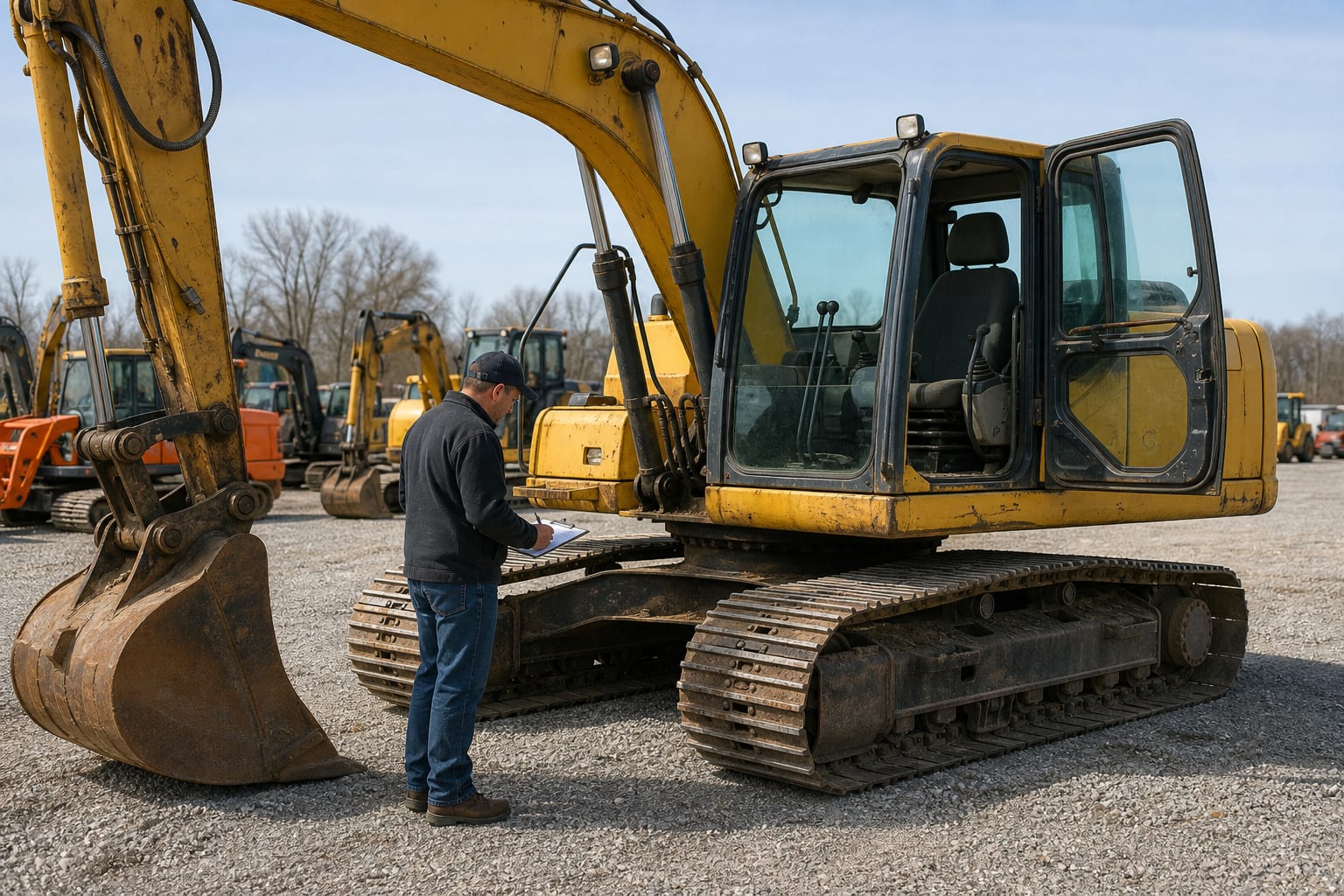
Before you wire a deposit, verify four things in this order: hours against real condition, undercarriage wear, hydraulic health under load, and paperwork. A used excavator that passes all four is rarely a bad buy. One that fails any of them is a repair project with a machine attached, and the discount you negotiated will not cover it.
Start with the numbers that cannot be argued with
Advertising
Utilaro
Publicitate pe Utilaro
Spatiu disponibil pentru furnizori, servicii si branduri din domeniul utilajelor.
Write down the hour meter reading, the build year, and the serial number from the data plate, then check that the serial matches the documents. Around 800 to 1,200 hours per year is normal for a working machine, so a fifteen-year-old excavator showing 4,000 hours deserves a question rather than applause: either it truly sat idle, or the meter has been replaced. Ask for service history, filter change intervals, and any major repair already done to the engine, pump, or slew ring.
Undercarriage: the most expensive surprise
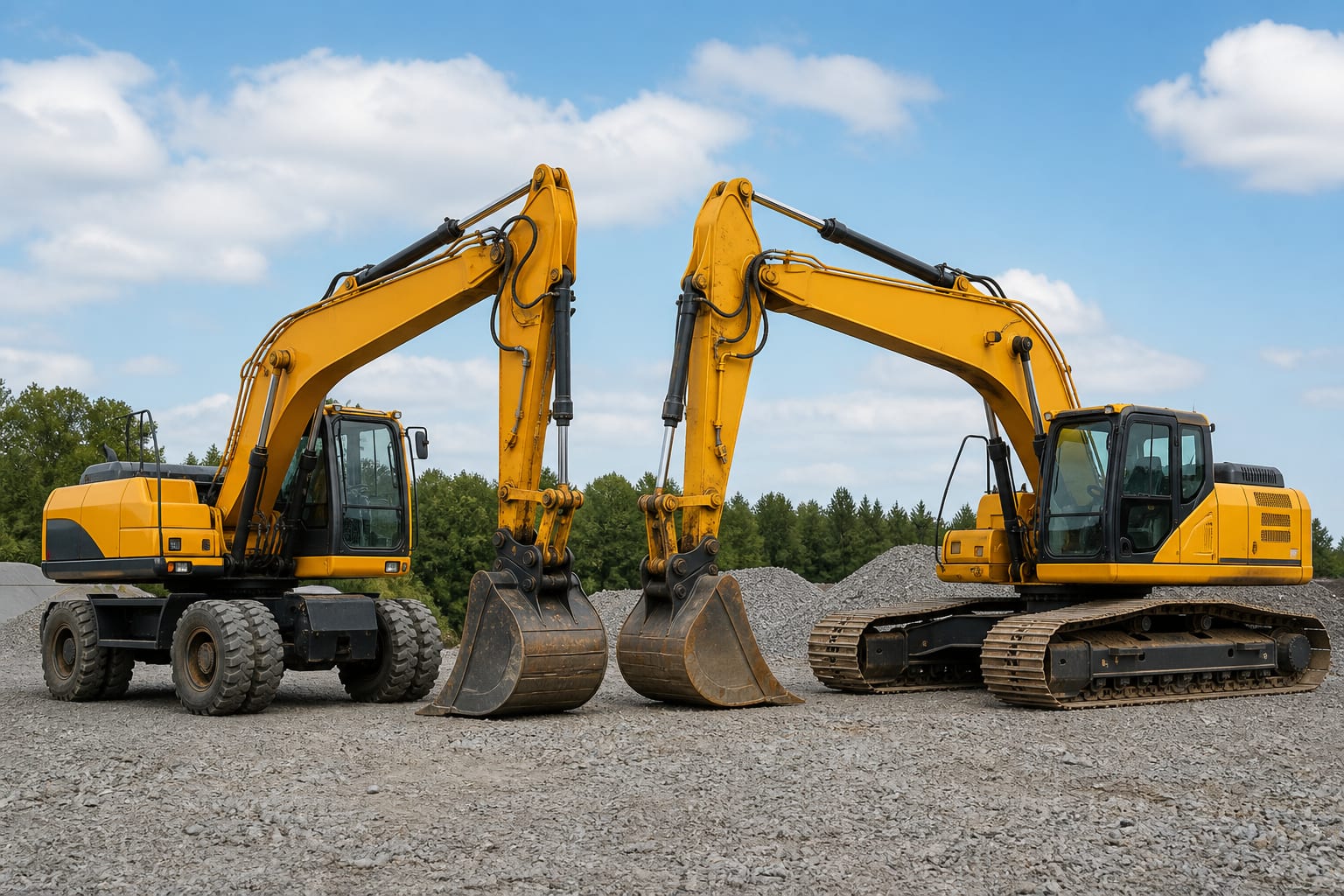
On a tracked machine, the undercarriage can represent a large share of the rebuild cost. Look at sprocket teeth for hooking, idlers and rollers for leaks and flat spots, chain tension, and remaining pad height. Uneven wear between the two sides usually means the machine spent its life turning in one direction on abrasive ground. On a wheeled excavator, check tyre wear, wheel bearing play, steering slack, and the condition of the outriggers and their cylinders.
Hydraulics, engine, and structure
Cold-start the machine if you can and listen for knocking, watch the exhaust colour, and check whether the engine settles into a steady idle. Then look for pin and bushing play at the boom, arm, and bucket, weld repairs around the boom foot and the counterweight, and any cracked or straightened structure. Wipe the cylinder rods clean and re-check them after a few cycles: fresh oil film is normal, dripping is not.
A 30-minute test plan
• Cold start, then listen at idle for one minute before touching anything.
• Full boom, arm, and bucket cycle at low and high engine speed.
• Slew 360 degrees both ways and feel for brake slip or a rough bearing.
• Travel forward and back, then counter-rotate to check both final drives.
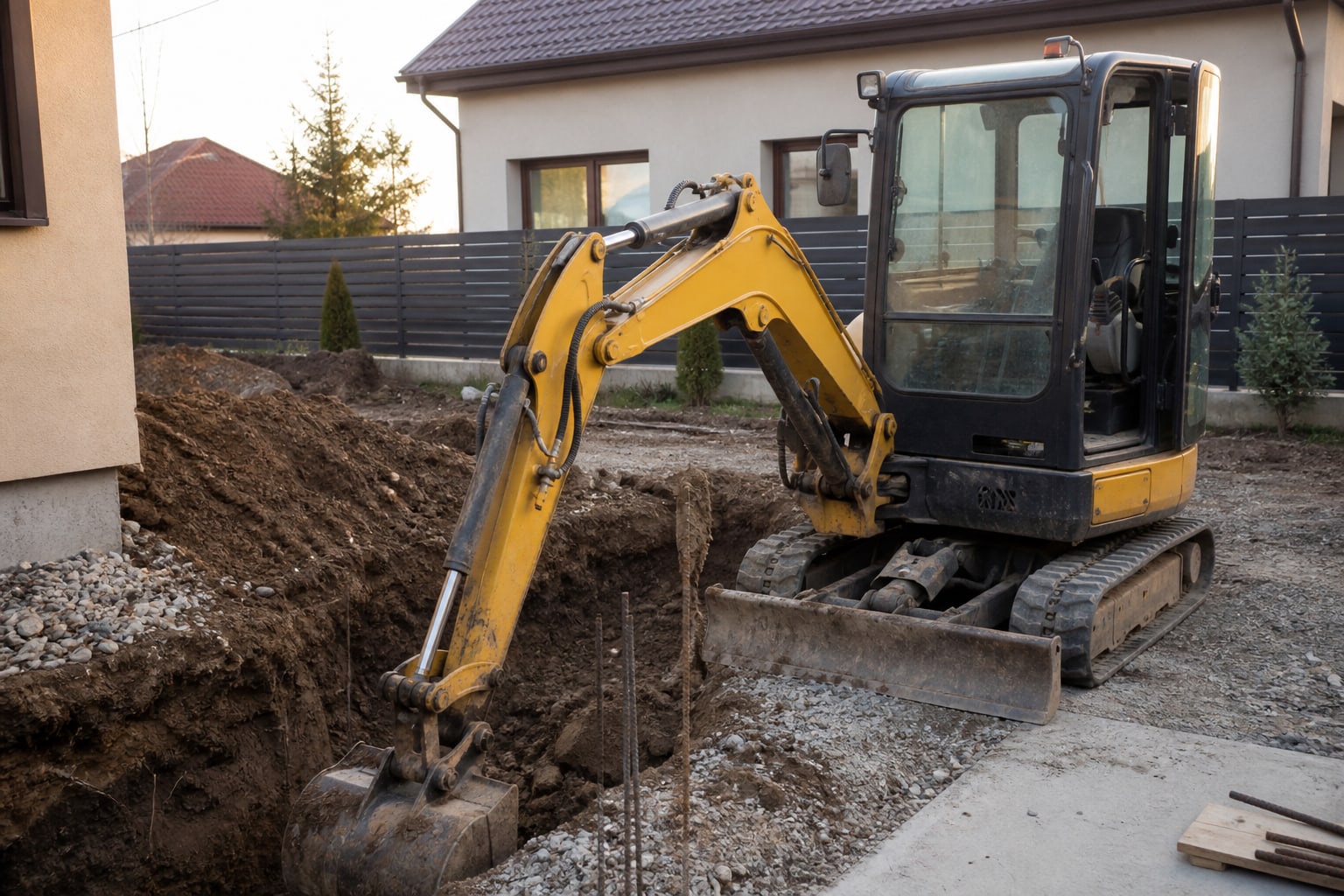
• Dig a trench and load a small heap so the pump works under real pressure.
• Lift a load and hold it for a minute — cylinder drift means worn seals or valves.
• Test the hammer or auxiliary circuit if the deal includes attachments.
• Walk the warm machine again and look for leaks that only appear at temperature.
Documents and a clean transfer
Confirm ownership, whether the machine is under a leasing or financing contract, VAT status (a private sale and a company sale are very different for a VAT-registered buyer), and conformity documents where applicable. Ask for the invoice chain if the machine was imported. Agree in writing on the handover date, the transport arrangements, and what happens if the machine fails within days of delivery.
Price the risk before you negotiate
Turn every finding into a number: tracks at 30% remaining, a leaking swivel joint, or a tired pump each has a repair cost you can estimate. Deduct those from your maximum price rather than arguing about the asking price in general terms. Sellers respond much better to a specific list than to a vague opinion that the machine is expensive.
Frequently asked questions
How many hours are too many? There is no hard limit. A well-maintained 12,000-hour machine with service records can outlive a neglected 6,000-hour one.
Should I pay for an independent inspection? For anything above a mini excavator, yes. An inspection typically costs a fraction of one hydraulic repair.
Is a deposit safe? Only against a written agreement that names the machine, the serial number, the price, and the refund conditions.
Should I buy or rent? If you need the machine for a few weeks a year, renting almost always costs less than owning and maintaining it.
Where to look, and the safer alternative
Prefer sellers who already publish clear photos and full specs on Utilaro sale listings, starting from the excavator category or the wider search.
If the job is short-term, renting may beat a risky purchase. Compare rent options while you negotiate, read wheeled vs tracked before you commit to an undercarriage, and use our owner listing checklist when you later resell or hire out the machine.